Car keys · Caledon
Transponder Key Programming
A second driver has joined the household, and the one existing key gets handed back and forth between two schedules that rarely line up. Everyone agrees another key would settle the daily handoff, but nobody has looked into how a modern ignition actually…
Transponder Key Programming
In plain words
When every key for a vehicle is genuinely gone, there is nothing left to vouch for a new one, so the visit starts by re-establishing secure access to the immobilizer's own module, sometimes through the vehicle's manufacturer network. Only once that access is confirmed can a fresh key be cut and its chip written in. It takes longer than adding a spare with an existing key on hand, but it follows the same underlying logic and finishes with the same test: an engine that starts on the new key alone.
How the visit goesThe new key slides into the ignition and turns exactly the way the old one did, but the engine only cranks. A dashboard light blinks near the fuel gauge, and no amount of turning the key gets the car past that cranking sound.
Caledon
How the visit goes
Reading the vehicle's own system
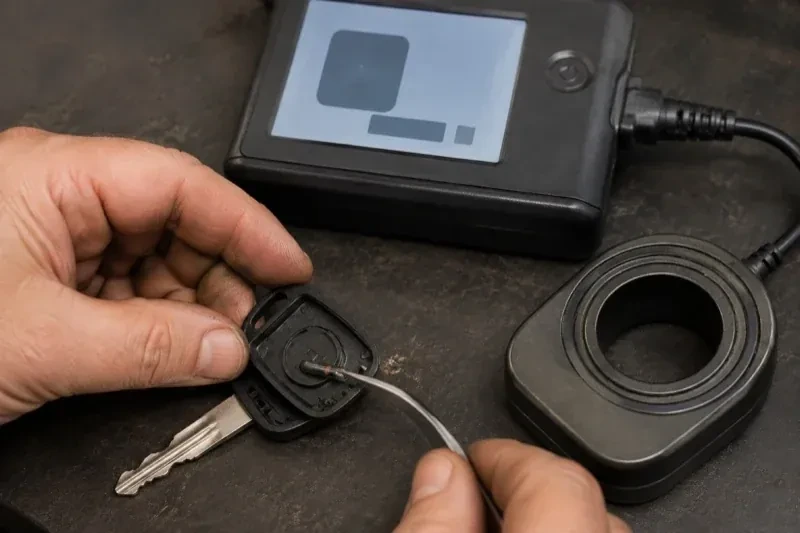
Every vehicle answers a question the locksmith asks before touching a key: what generation of chip does this immobilizer expect, and where can its key list be reached? A simple fixed-code chip behaves differently from a rolling-code or encrypted one, and some models allow a key to be added through the onboard diagnostic port while others gate that list behind a manufacturer-level security session. Reading this correctly first avoids wasted effort later and tells the locksmith exactly which chip family the new blank needs to carry.
Proving it with the engine, not just the tool
A programming tool reporting success is not where the job ends. Every key that should now work is tried in turn: a cold start, a restart a few minutes later, and several full ignition cycles, because a connection that looks fine once can still be marginal. Remote and proximity functions get the same treatment, tested from a normal distance rather than right beside the vehicle. The visit is only considered finished once every key does what it is supposed to, more than once.
Room for the next driver
Most vehicles can hold more than one or two keys in memory, so adding a second household member later is usually a smaller job than the first visit was, provided at least one working key remains to authorize the addition. Knowing that in advance changes how a household treats an existing key: less like the only copy in the world, more like the first of what could reasonably become several, each one traceable to the same visit that started the list.
Transponder Key Programming
In the van
- Chipped key blank
- Fob battery
- Emergency insert blade
- Diagnostic laptop or tablet
- Proximity smart key
What affects the quote
Same fees day, night or weekend
1Number of new keys requested
One replacement key is a smaller task than several keys for several drivers cut and programmed in the same visit, even though the underlying process for each additional key is largely the same.
2Time of the appointment
An appointment during regular daytime hours is scoped differently from one outside them, and the locksmith states which applies when the visit is booked so there is no surprise about it on arrival.
3Type of key: blade, remote-head or proximity
A basic transponder blade, a remote-head key with buttons, and a push-button proximity key each involve a different amount of pairing beyond the immobilizer chip itself, which affects both the parts involved and the time the visit takes.
Transponder Key Programming: questions
My key turns and the engine cranks, but it won't start. Is that this?
That pattern, the starter turning the engine over without it catching, often points to the key or immobilizer rather than a fuel or ignition-timing fault. A flashing security light on the dashboard while this happens adds to that picture. A diagnosis, checking whether the vehicle actually recognizes the key's chip, is what confirms which one it is before any programming begins.
Do I need to bring the car in, or is this done where it's parked?
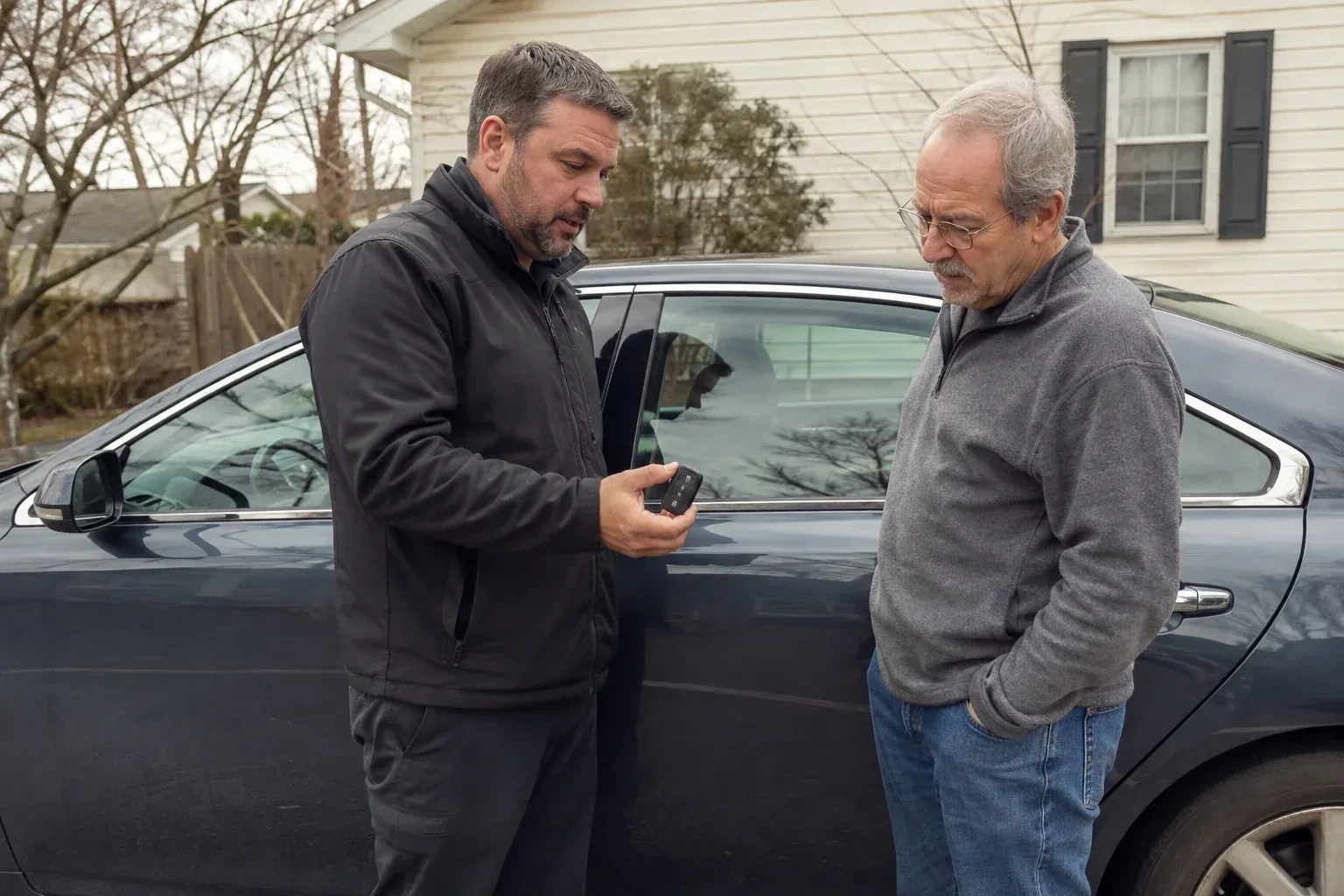
Programming is done at the vehicle itself, since the equipment connects directly to it. Whether that is a driveway, a parking lot, or wherever the car happens to be, the visit travels to the vehicle rather than the other way around. The one requirement is that the vehicle is present and accessible for the whole visit, since the process reads and writes to its own onboard systems.
How do I know if this is a key problem rather than something else?
The clearest sign is the engine cranking normally, meaning the starter motor turns it over, but never catching, often alongside a flashing security light. A fuel or mechanical fault usually behaves differently, such as cranking slowly or making unusual noise. Describing exactly what happens when the key is turned helps the locksmith tell the two apart before arriving.
Car Keys
Transponder Key Programming near you
A locksmith's week in Caledon is a mix of small fixes and bigger decisions. A cylinder rekeyed after a lost key, a deadbolt added to a door that never had one, a shop rekeyed after staff changes, a safe that finally opens. The pages below describe each service and how the visit usually goes.