Commercial · Caledon
Commercial Rekeying
A break-in overnight took the cash float and a staff member's bag with her work keys inside it. The glass is being replaced this morning, but the key that opened the door yesterday will still open it tonight unless the cylinders are changed.
Commercial Rekeying
In plain words
Taking over a commercial unit is the moment to make the locks yours. The keys handed across at signing are only the ones the previous occupant remembered; cleaners, suppliers and former staff may still carry others. Rekeying every cylinder your lease gives you control of gives you a clean start on day one, with keys cut for your team and a chart of which door each one opens. The locksmith also clears up the odds and ends that come with a new lease: a padlock with no key, a mailbox lock seized since the last tenant. You open knowing exactly who can get in.
How the visit goesThe renovation is finished and the contractors have gone, along with the loaner keys they used for six weeks. Trades, delivery drivers and an inspector all came through, and the front door still answers to the key that was passed around the site.
Caledon
How the visit goes
The state of the cylinders and the doors
A cylinder about to be repinned is examined the way a mechanic looks over a part before rebuilding it. The plug should turn smoothly with the right key, the pins should spring back cleanly, and the face should be free of the green bloom that salt spray leaves on storefront hardware after a few winters. The locksmith also checks how the door closes: a strike that no longer lines up, a closer that slams, or a deadlatch that fails to catch will keep a freshly rekeyed door from locking properly. Most cylinders pass and are repinned; a worn or corroded one is pointed out so you can choose a replacement for that opening.
Repinning a standard cylinder
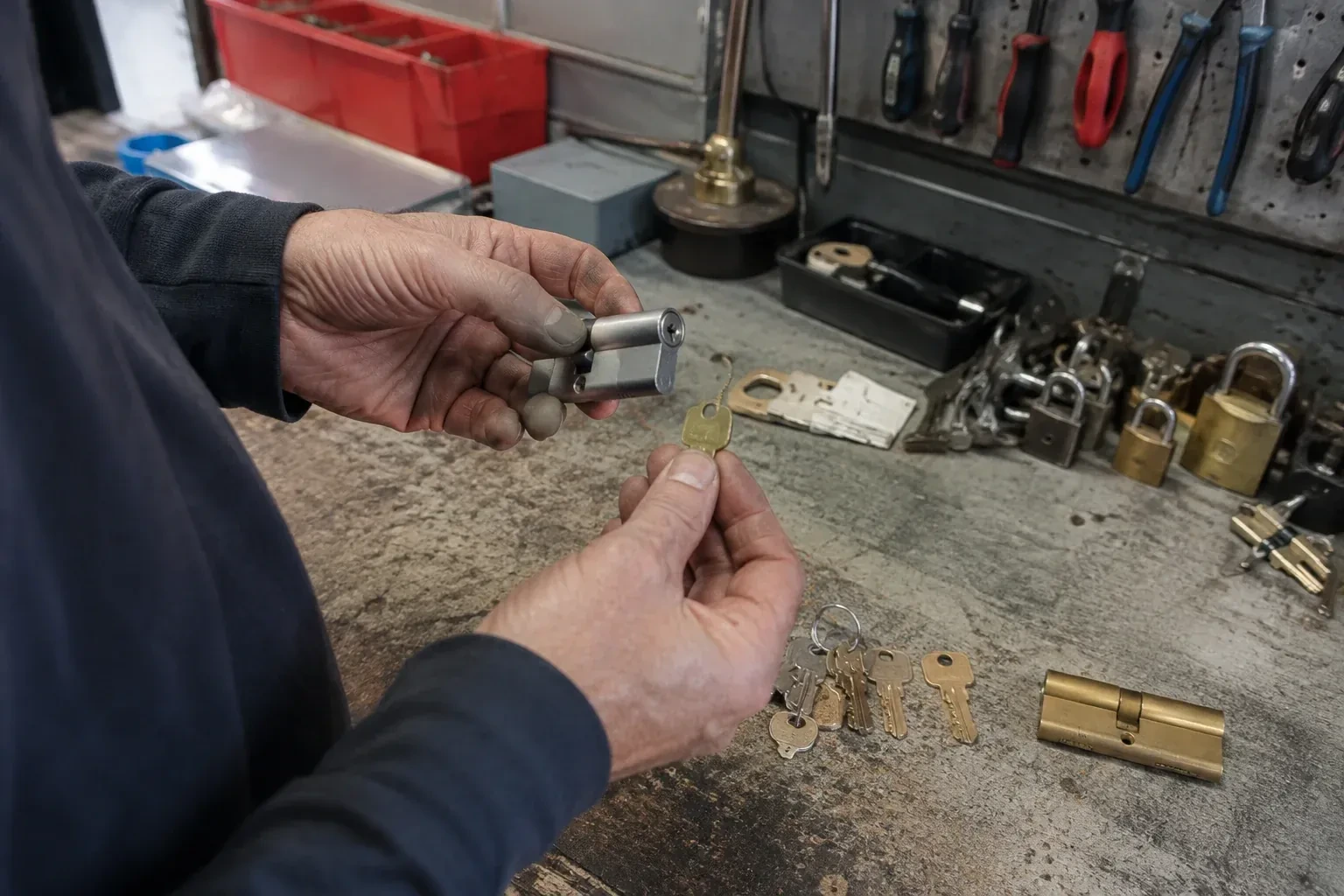
The cylinder is taken off the door and its plug is slid out with a follower, a small tube that holds the top pins and springs in place so nothing scatters. The old bottom pins are tipped out, and a new combination is chosen from the pinning records so it does not collide with any other key in the plan. Fresh pins of the matching depths are dropped into each chamber, the plug goes back in, and the new key is tried: it should turn as smoothly as if the lock were new, and the old key should stop dead. The cylinder is then refitted and adjusted so the cam or tailpiece throws the bolt fully.
How copies get made from now on
If the business moved to a restricted keyway, the way keys are copied has changed for good. Hardware stores and kiosks do not stock the blanks, which makes running off a spare on a lunch break far harder to arrange. New keys are ordered from the locksmith by one of the people named on the authorization letter, who signs for them, and the register grows by exactly that many. On a standard keyway, the same discipline is kept by habit: the manager orders keys, the register records them and a key that turns up unlisted prompts a question. Either way the count on paper and the count in the world stay the same, which is what key control means.
Commercial Rekeying
In the van
- Rekeyable padlocks
- Plug follower
- Dry graphite or PTFE lubricant
- Commercial pin kit
- Code key machine
What affects the quote
Same fees day, night or weekend
1No existing chart or keys
When nobody knows what the current keys open, the locksmith reads and records each cylinder before planning the new keying, and that reconstruction is time in the quote.
2Restricted keyway
Moving to a patented, restricted keyway means new cylinders or cores rather than a repin of the old ones, and the blanks themselves carry a higher price than standard keys.
3Distance to the premises
Travel to the site is part of the call-out, and a unit in a downtown plaza and one at the end of a rural industrial road are different trips.
Commercial Rekeying: questions
How many keys should we have cut?
Count the people who need each group, add one spare per group for the safe, and stop there. Extra keys cut 'just in case' are the ones that end up unaccounted for. Because the keys are cut to code from the pinning records, more can be produced later to the same standard, so there is no need to stockpile on the day. Restricted keys are ordered by the named signatories when needed.
Can all our doors be put on a single key?
Yes, if the cylinders share a keyway or can be fitted with ones that do. Keying everything alike is popular with small shops because staff carry one key and spares are simple. The trade-off is that one key then opens the cash room as readily as the front door. Many businesses choose a middle path: the doors everyone uses on one key, the sensitive rooms on another, and an owner's master that opens both.
Is a restricted keyway worth it for a business?
A restricted keyway uses blanks that only the locksmith or authorized source can obtain, released against whatever that key-control program requires, a signed letter, card, signature record or factory authorization naming who may order keys. Hardware stores and kiosks have no blanks, so copies are far harder to get without your say-so. It costs more per key than a standard keyway and is most valuable where keys pass through many hands, such as retail with part-time staff, shared premises or anywhere the count of copies has drifted before.
Commercial Locks
- Access Control InstallationYou just leased the empty unit next door and want the new tenant to open their own suite without a…
- Panic & Exit HardwareThe daycare wants the yard gate and the classroom door alarmed so a staff member hears the moment…
- Commercial-Grade Lock ReplacementA new tenant moved into the unit next door, and the property manager just found three different…
Commercial Rekeying near you
A locksmith's week in Caledon is a mix of small fixes and bigger decisions. A cylinder rekeyed after a lost key, a deadbolt added to a door that never had one, a shop rekeyed after staff changes, a safe that finally opens. The pages below describe each service and how the visit usually goes.