Commercial · Caledon
Master Key System Design
A new hire at the shop gets handed whatever spare key happens to be in the drawer, and it turns out to open the stockroom, the back office and the safe room all at once. The owner realizes nobody actually decided who should open what.
Master Key System Design
In plain words
In a building shared by several tenants, departments or contractors, master key system design draws a clear line between who needs a broad master and who needs a single change key for their own door. Cleaners, maintenance staff, department heads and the owner typically sit at different levels, and the hierarchy is built to reflect that rather than to make life easier for whoever is issuing keys that week. The chart that results shows every level at a glance, which makes it far simpler to answer a basic question: who can currently get into this room.
How the visit goesThe office key ring has become the org chart. Every manager carries a fistful of cuts, a couple of staff hold copies nobody remembers issuing, and when someone asks which key opens the records room, three different people give three different answers.
Caledon
How the visit goes
What a shared or multi-tenant building already has in place
Where the property sits inside a larger building, the check looks at what is already shared: a condominium corporation's own lobby or garage system, a landlord's building-wide master, or another tenant's separate keying. The new hierarchy is designed to sit alongside those systems rather than to cut across them, so a tenant's own suite keeps its own private levels while common areas continue to answer to whoever already manages them. Sorting this out first avoids designing a system that quietly conflicts with access someone else controls.
Fitting or replacing hardware to match the plan
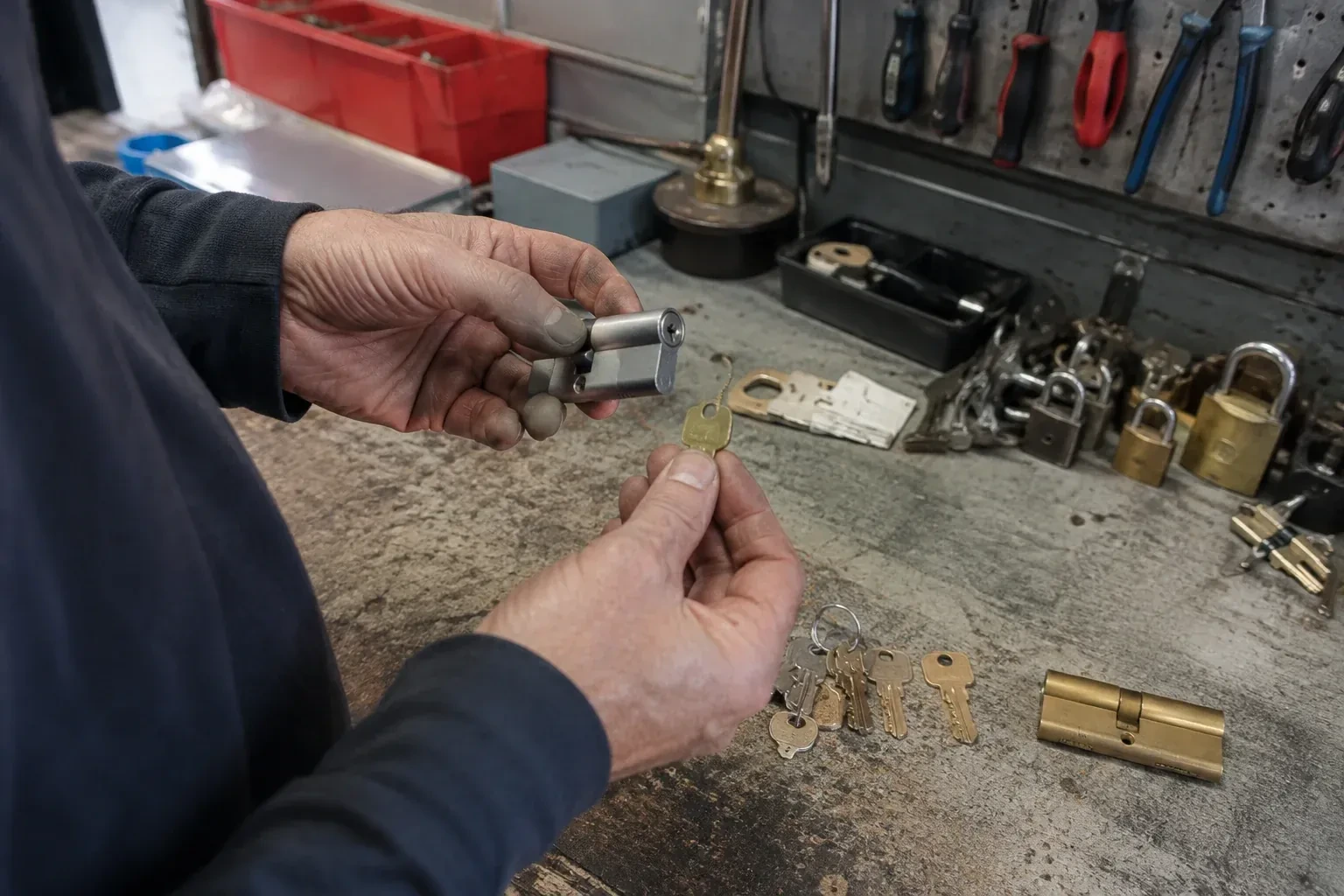
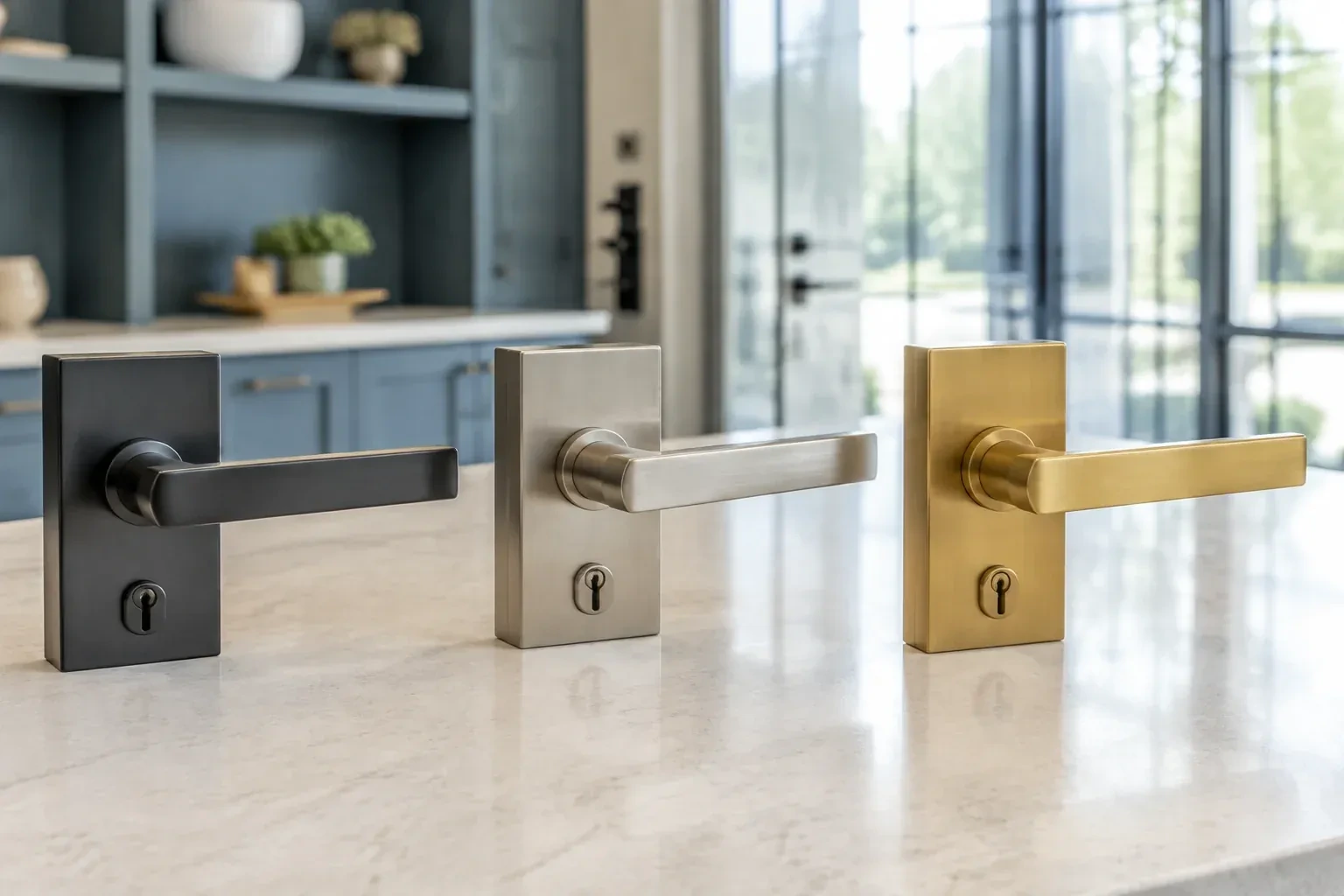
Cylinders that can join the new hierarchy without modification are pinned in place; those that cannot, whether because of age, a mismatched keyway or simple wear, are replaced with compatible hardware chosen to match the finish and function already on the door. Locksets on a barrier-free path of travel are fitted with lever or paddle-style hardware that can be operated with a closed fist, keeping those doors usable for everyone while still carrying their assigned level in the same hierarchy as the rest of the building.
A plan for the next new hire or department
Adding someone to the system afterward is usually a matter of consulting the existing chart and issuing them a copy of the authorized key their role already calls for, rather than opening the whole hierarchy back up. A genuinely new combination is only usable on doors whose cylinders are pinned to accept it, so the same chart shows whether that means picking an existing bitting or scheduling a repin, keeping the decision informed rather than improvised.
Master Key System Design
In the van
- Locking chart storage cabinet
- Cylinder pinning kit
- Compatible replacement cylinders
- Restricted or standard key blanks
- Master pin kits
What affects the quote
Same fees day, night or weekend
1Documentation and chart detail requested
A simple chart listing levels and holders is the baseline. Some businesses want a more detailed record, cross-referenced by department, room number or staff role, which takes additional time to prepare and is quoted as part of the documentation work.
2Electronic locks alongside mechanical keys
Where keypad or card doors need to line up with the mechanical hierarchy, the quote includes the extra coordination of matching access levels across both systems and pinning any mechanical override cylinders into the same chart as the rest of the property.
3Working around an occupied, operating property
Rekeying doors in a planned sequence so a business keeps operating throughout, rather than all at once, takes coordination with the owner's schedule. Properties that need this staged approach, with interim arrangements for doors mid-conversion, add planning time beyond a straightforward, all-at-once installation.
Master Key System Design: questions
How is accountability maintained when several people hold different levels of keys?
Through the chart and issuance log rather than memory. Each level is tied to named roles or people, each key is marked to reflect its level rather than the door it opens, and any change of hands is recorded with a signed receipt. That record names every authorized holder for a door, though it can only account for a key that was never copied, loaned or picked up by someone outside that list.
What is a restricted keyway and do I need one?
A restricted or patented keyway limits who can cut a copy of your keys to whoever holds the manufacturer's authorization record, rather than any hardware counter. It suits doors behind which cash, records or controlled supplies sit. A standard keyway is simpler to administer and works well for lower-risk doors where duplication control matters less.
Do all the doors on my property need to be part of the master system?
No. Some doors, such as a private office or a room with a single regular user, can reasonably stay on their own key outside the hierarchy if there is no real benefit to including them. The assessment is partly about deciding which doors belong in the system and which are simpler left alone, rather than assuming every lock has to join.
Commercial Locks
- Access Control InstallationYou just leased the empty unit next door and want the new tenant to open their own suite without a…
- Panic & Exit HardwareThe daycare wants the yard gate and the classroom door alarmed so a staff member hears the moment…
- Commercial-Grade Lock ReplacementA new tenant moved into the unit next door, and the property manager just found three different…
Master Key System Design near you
A locksmith's week in Caledon is a mix of small fixes and bigger decisions. A cylinder rekeyed after a lost key, a deadbolt added to a door that never had one, a shop rekeyed after staff changes, a safe that finally opens. The pages below describe each service and how the visit usually goes.